Watercolors and their inspiring timeless beauty
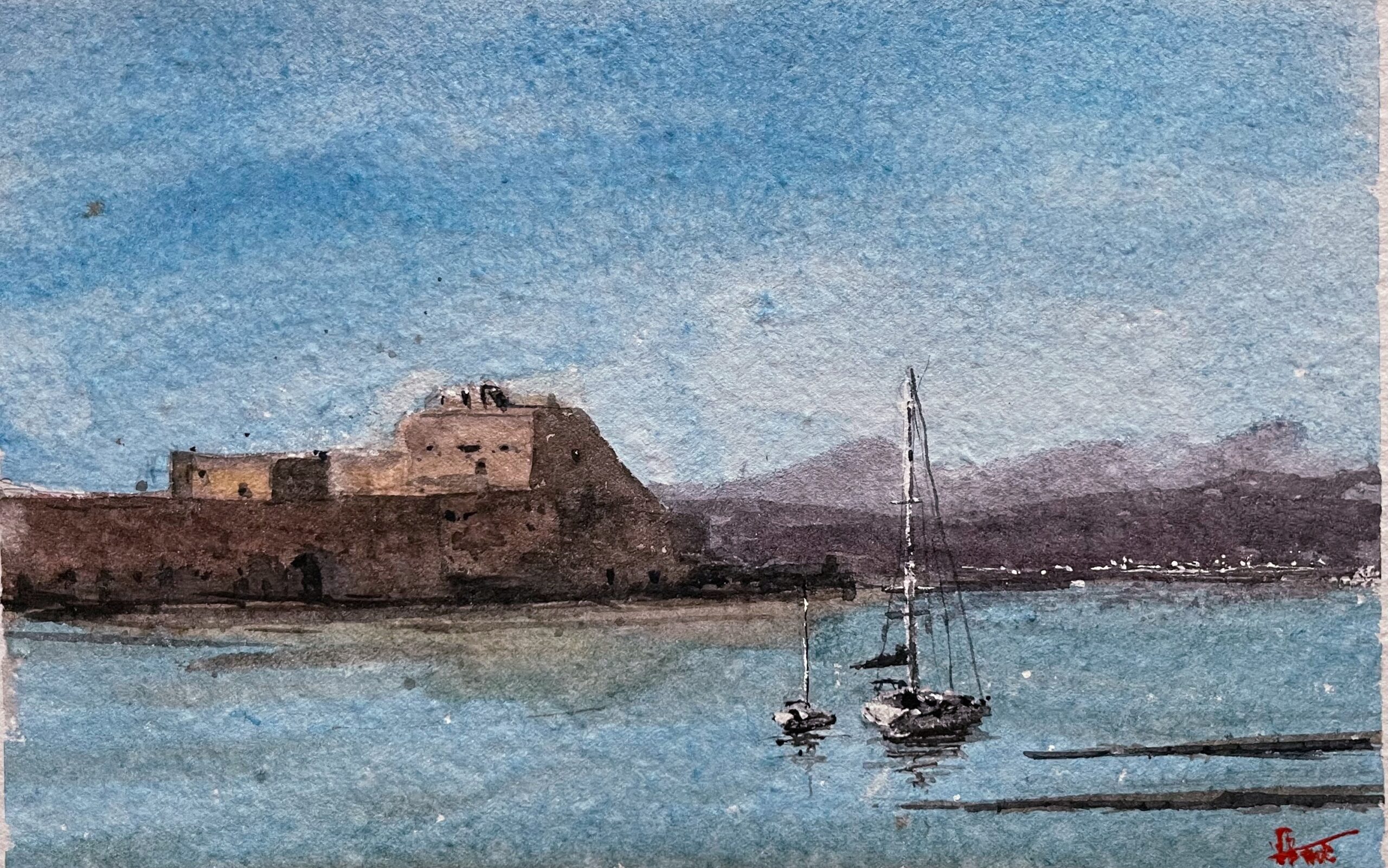
Watercolors: Unveiling the Timeless Beauty of Translucent Art Or In Other Words Why I Love To Use This Medium.
Watercolor painting, with its ethereal and translucent charm, stands as a timeless art form that has consistently captivated artists and art aficionados across centuries. The delicate, almost enchanting quality of watercolors is a result of their inherent transparency, which, when pigments mingle with water and gently embrace the canvas, crafts a world of soft gradients and vibrant hues. This visual symphony of colors offers a feast for the senses and invites viewers into a realm of artistic wonder.
The essence of this media beauty lies not only in its visual appeal but also in its ability to spark the imagination. This remarkable medium encourages active engagement from those who observe it, prompting them to bridge the gap between colors and forms with their own interpretations. Whether it’s the serendipity of a landscape, a portrait that resonates emotionally, or any subject in between, watercolors empower artists to convey their thoughts and feelings with a unique eloquence. This duality, achieved through the remarkable interplay of transparency and interpretive space, establishes watercolors as an enduring and enchanting art form, etching their place firmly in the history of artistic expression.
**The Artistry of Watercolors**
Watercolor painting is an age-old practice with roots that extend into the annals of art history. It boasts a rich tradition of use by various cultures and artists, with early evidence dating back to ancient civilizations. However, it wasn’t until the Renaissance period that watercolors began to gain significant recognition and respect as a legitimate art form. Artists such as Albrecht Dürer and Leonardo da Vinci experimented with watercolors, recognizing their unique qualities.
One of the defining characteristics of watercolor is its transparency. Unlike opaque mediums like oil or acrylic, watercolors rely on the luminosity of pigments. This translucency allows for the layering of colors, enabling artists to create depth and luminance in their works. Watercolorists often work with a limited color palette, honing their skills to master the control over the medium’s unpredictable nature.
**The Delicate Dance of Water and Pigment**
The intrinsic beauty of watercolors is deeply tied to the intricate dance of water and pigments on paper. When water is applied to the paper, it flows, blends, and disperses the pigments in unique and often unexpected ways. Artists must harness this fluidity, employing techniques like “wet-on-wet” and “wet-on-dry” to create desired effects. The choice of paper also plays a pivotal role, as the paper’s texture interacts with watercolors, significantly influencing the final result. Different papers offer distinct characteristics, including granulation, smoothness, and absorbency, which contribute to the diversity of watercolor artworks.
**Transcending Boundaries**
The transcendent beauty of watercolors is not limited to traditional painting alone. Contemporary artists have pushed the boundaries of this medium, experimenting with innovative techniques and combining it with other mediums to create mixed-media artworks that challenge convention. Moreover, the digital age has brought watercolors into the virtual realm, where software and digital tablets allow artists to emulate the effects of traditional watercolors with remarkable precision. These technological advancements have expanded the horizons of watercolor art, attracting a new generation of artists who can appreciate the marriage of tradition and innovation.
**The Power of Interpretation**
Watercolors are not only visually appealing but also deeply emotional. Their delicate washes and fine lines have the capacity to convey a broad spectrum of emotions, from the serenity of a tranquil landscape to the raw intensity of a portrait. The viewer is often invited to become an active participant, filling in the gaps between colors and shapes with their unique perspectives. This participation engages the viewer in a dialogue with the artwork, allowing them to interpret and connect with it on a personal level. Watercolors, thus, transcend mere visual stimulation, creating an emotional resonance that is both profound and enduring.
**A Canvas of Infinite Potential**
One of the remarkable qualities of watercolor is its portability. Compact palettes, a variety of brushes, and lightweight paper make it an ideal choice for artists who wish to capture scenes and impressions while on the move. The inherent versatility of watercolors enables artists to set up their studios in diverse environments, from the bustling streets of a city to the serenity of a remote countryside. This flexibility has given rise to “plein air” painting, an outdoor artistic movement where artists immerse themselves in the natural world, using watercolors to document the ever-changing play of light and color in the landscape.
**The Enduring Allure**
In conclusion, the beauty of watercolors is truly remarkable, stemming from their unique blend of transparency, unpredictability, and emotive potential. The fluidity of watercolors, combined with the inherent interpretative space they provide, continues to captivate artists and viewers alike. From their historical origins to their contemporary evolution, watercolors remain a testament to the enduring power of artistic expression, encapsulating beauty, emotion, and creativity on a canvas of water and pigments. Explore the captivating world of watercolor painting, where the delicate interplay of transparency and interpretation awaits your discovery.
I know, I wrote this essay that probably very few will read, but I recently build up on this, here in this article
Please also follow this links where you can find some, only few, of the modern artists that I love most, in loose order:
Alvaro Castagnet
Pito Campos
Joseph Zbukvic
Geremia Cerri
Thomas Schaller
Vicktoria Prischedko
Winslow Homer